Showing posts with label home garden. Show all posts

6.03.2012

Garden Update: Dogs, Grubs, and Beer, Oh My!

Although I've never planted a garden larger than a few vegetables I don't consider myself to be completely clueless when it comes to growing plants. After college I worked as a soil toxicologist and my job was to germinate seeds in Superfund soils. If I can get seeds to sprout in various forms of toxic dirt, the store bought organic dirt should be a breeze. Right?

When I transplanted the seeds I sprouted indoors the weather was pretty warm for a few days. I watered the plants each night and they were looking good. After a few days I noticed some of the leaves were missing and others had a few yellow spots. Within a week I noticed that the beans which gave me trouble indoors quickly took off. Whereas the cucumbers were beginning to look like they were struggling. The cucumbers eventually wilted and died. I lost one of the tomato plants and the basil. The zucchini and carrots sprouted and everything else was looking good.

My husband put up a temporary fence to divide our back yard in half. On one side we have 2 Labradors and the other side is for our toddler to play along with the garden. Since we hope to move sometime in the next 5 years we didn't want to invest in a legitimate fence. This is how well the fence worked:


So, naturally I didn't realize my Labrador could get into the garden until it was too late. I took my morning stroll out to the garden to find it filled with foot prints and several missing plants. He either ate the plants, broke them off, and I'm pretty sure he marked a little territory in the garden as well. The plants he did not eat were yellow and wilted which lead me to believe they succumbed to dog urine. Talk about frustration. All of my hard work vanished in one night, except for the carrots.

Determined to grow a garden this year I went back to the hardware store and purchased a 4' galvanized wire fence. I attached it to the existing fence stakes with zip ties so now there is a double fence border between the dogs and the rest of the yard.

While I was at the hardware store I also purchased 2 heirloom tomato plants, a cayenne pepper plant, 4 bell pepper plants, and 4 basil plants. Some of the other veggies weren't much bigger than what I knew I could grow in a week so I simply decided to plant the seeds directly into the garden.

A few mornings later I went out to water the garden and I found a white grub on top of the soil and some disheveled looking leaves, especially on the basil. I took an empty plastic applesauce container and pushed it into the soil and filled it with beer to catch some grubs. I'm now up to 2 containers and this is what I find after a few days of letting the beer sit:


The grubs crawl into the beer and drown. Sadly I think I'm going to have to create a beer garden to keep up with them. They've taken out 1 basil plant and significantly impacted the other 3 just like the one shown below.


The grubs are also feasting on the lettuce which is planted on the opposite diagonal of the raised garden bed.


I did a little research yesterday and also asked the Urban Organic Gardener that I follow on Facebook for some advice. Since grubs typically stay in one location beer will work but since they seem to be all over my garden it was recommended that I apply Beneficial Nematodes. They're essentially worms that prey on destructive garden pests but they don't have any affect on the good bugs. A pesticide would kill both the good and bad bugs and I don't want to eat pesticides either. Since I purchased all of my garden soil I'm wondering if there may not have been many nematodes. They are naturally found in soils all around the world so one would think they would be present. I'm happy that they work by disintegrating the pests from the inside out so I won't have to continually dispose of dead bugs like I do now.  Yuck! 


So, how do you know if you have grubs if you aren't lucky enough to find one on top of the soil like I did. They leave a slime trail on the surface of the soil and plants that glistens when the sun shines on it. I've always noticed these trails first thing in the morning since they dry out during the day. 


Although this garden has been frustrating at times there are some plants that are doing well which have made it well worth the trouble this far.


Tomatoes
Organic green onions I bought at the supermarket and planted; one of the best ideas I found online. The cayenne pepper plant is in the center just behind the 2nd and 3rd green onion. On the left are a few of the bell pepper plants and in the top right corner is a small tomato plant from a seed I planted. 

So, I'm off to find some beneficial nematodes for the garden. Although I planted some lettuce and basil seeds in flower pots I'm considering moving the basil from the garden to a pot as well. The grubs will not get the best of me and my garden : )


4.24.2012

Growing an Herb Garden

If you've never grown an herb I urge you to pick your favorite one to grow and use it in your cooking. Once you've become accustomed to cooking with herbs growing right outside your door you won't be able to cook without them. Cooking with fresh herbs gives food flavor without adding a lot of salt or sugar. Plus, herbs are actually good for you.

Perennial Herbs

Thyme 

Thyme (source)


Used in many savory dishes it grows well in a sunny environment and doesn't need any special attention. Although I live in southern Idaho it doesn't get horribly cold here in the winter. When I'm preparing meals for  Thanksgiving or Christmas I'm still able to use the Thyme growing outside.

Sage

Sage (source)


Similar to Thyme it grows very well in a hot and dry environment. The annual rainfall where I live is a mere 12 inches a year and we average 201 sunny days a year. On the outskirts of town sage is one of the few plants that survives. I think sage is also pretty so I've planted some in front of my house. The green leaves have a hint of silvery gray and the plant develops royal purple flowers in late summer.

Oregano

Oregano (source)


My oregano is planted by the edge of the covered patio. It receives the hot afternoon sun and an occasional watering from the sprinklers. Over the years the patch has grown at a rate typical of most plants but I'm definitely not worried about it taking over the garden.


Mint

Mint (source)
On the other hand, be careful where you plant mint because it is likely to take over a garden bed. The north side of the house receives a few early morning hours of sunshine but is shaded the rest of the day. Since I have difficulty growing most things in this location I planted mint hoping it would take over. It has done well but it hasn't filled in the bed as quickly as I would have liked. Granted, I only put in a few small plants and expected them to fill a bed nearly the length of the house. Once a year the dried limbs should be broken off. The dry limbs have seeds for new plants so if you want more mint plant accordingly otherwise throw it away. If you put it in the compost you'll have mint growing wherever you spread your compost.


Lemon Balm

Lemon Balm (source)
A friend dug up a little of this plant from her garden and it has spread pretty quickly through mine. Although it is only planted in the back yard I have found small plants of lemon balm in the front yard. If you pick a leaf off of the plant it smells like lemons. I'm guessing the lemon balm traveled via the blade of the lawnmower or the sole of a shoe. It's very easy to grow and the dried limbs need to be broken off once a year. The dried limbs contain seeds for new plants so keep that in mind if you do or don't want more plants. Much like mint be careful where you plant lemon balm. I've never used lemon balm for cooking but I hear it makes an excellent tea.

Bi-annual Herbs

Rosemary

Rosemary (source)

Rosemary does well with a fair amount of water and sunshine but a plant only lasts 2 years. In order to keep rosemary around a cutting must be made from the plant and used for growing a new plant. I have had a plant dry out due to too much sun and not enough water. (Do they really dry out for any other reason?) I've never generated a new plant from a cutting but I noticed some store bought rosemary developed roots when I stuck the ends in a glass of water. Perhaps this year I'll give it a try because I love rosemary and it is very versatile.


Annual Herbs

Basil

Basil (source)


I've planted basil in a few locations but it seems to do well with a lot of sunshine and and water. Much like sage, and thyme it can really take some intense heat. One of the things I love about basil is the more you break off leaves for cooking the more the plant grows. 

Parsley

Parsley (source)

Planted in a relatively shady spot parsley did very well. I'd say it grew to a bush nearly 2 feet wide. I use fresh parsley from time to time but definitely not often enough to use a bush 2 feet wide. Even with a dusting of snow the parsley remained green well into December. It was definitely tougher than I thought it would be. I planted it on the north side of the house about 1 foot from the foundation so it was fairly well protected.

Cilantro

Cilantro (source)


I love cilantro and it is a crucial ingredient for some of my favorite dishes, however, it's a bit of a high maintenance diva in the garden. When blooms appear they have to be broken off right away if you want to keep the plant growing. Otherwise the blooms turn to seed, the plant dries out, and you're left with coriander. It's great that two herbs come from one plant but you definitely have to know what you're doing to maximize the herb you want.


Dill

Dill (source)
When I planted some cucumbers a few years ago I planted dill with hopes of canning some pickles. The cucumbers didn't produce very well in my poor Idaho soil so the pickles were never canned. I used the fresh dill a few times when I was cooking but it isn't an ingredient I use very often. Since fresh dill looks very delicate I planted it in the shade on the north side of the house. It grew to be about 2 feet tall but didn't last very long. The plant produced flowers and similar to cilantro it was done shortly after. If the flowers are removed before they dry the plant will continue to produce new leaves.

4.21.2012

Layout for My Raised Garden Bed

Today's high temperature is in the low 80's and I've been anxious to plant my garden. According to my climate zone I'm supposed to wait until the end of May. However, over the next 10 days we're expecting temperatures mostly in the 70's and 80's and no evening temperatures are forecasted to be lower than 40. I'm sure I'm jumping the gun and some of you may or may not agree with me. Based on today's weather I'm figuring I'll have the month of May to keep a close eye out for potential frost. My plan is to watch the weather closely and cover the garden bed if necessary. In the scaled figure below you'll see how I arranged my 8' x 4' raised garden bed.


During the course of the day the sun travels from the bottom right corner in the figure above towards the upper left corner. When I was deciding on the layout I put the taller plants in the back of the bed so the shorter plants in the front hopefully won't be shaded over time.

Here are the varieties I chose:


The tomatoes, jalapenos, bell peppers, redina lettuce, basil, cucumbers, and a few beans were germinated indoors. I had trouble indoors with the watermelon and beans. They both sprouted and then died. I think the self watering seed starter kept the seeds too wet. I took the cover off of the seed starter kit last week and planted a few more beans and those haven't had any problems. Today I planted seeds for watermelon, carrots, nevada lettuce, and zucchini directly into the soil. Here is a photo of the garden before anything was planted today.


The cedar bed came in a kit I purchased at a local home improvement store for $80. Between the cost of
lumber and buying a saw and hardware to build my own I figured it was nearly the same amount of money. I also spend most days, sun up to sun down, with a toddler who wants to "help" no matter what I'm doing. (My husband is a flight paramedic who works long shifts) The kit above was perfect because the pieces easily slid together with dove tail joints and no tools were required. Here is a photo of one corner joint.


More updates on the way : )

4.12.2012

The Seeds Have Sprouted Without Pesticides

If you asked people whether or not they trusted the government most of them would tell you "NO". Yet for some the government's control over food or lack thereof, goes unnoticed.  For those of us who know not to trust the government's oversight of our food safety many choose organic over conventional produce in order to avoid pesticides. While the toxicity of each pesticide varies, birth defects, nerve damage, cancer, and "other" health effects are listed on the EPA's website as potential outcomes of pesticide exposure. The sensitivity to these chemicals will vary among individuals and I think people should avoid them if possible. My husband likes to tease me by asking if I want a radioactive rock because it's "all natural". The thing is, we know radiation is dangerous so we protect ourselves from it. So, why do we allow our food to be sprayed with things which can cause adverse health effects? As a former analytical chemist what concerns me is that the toxicity of each pesticide is tested individually. While it would be a lengthy and complex study I'd like to see someone attempt to understand how all of the pesticides combined affect our health. 


In the meantime, I trust myself and I really want to know what happens to my produce. So, I've started some seeds indoors for a vegetable garden this year. At the local store I picked up a Burpee Self Watering Seed Starter kit with 16 cells. (see video below) The set came with soil optimal for sprouting seeds and a design that allows it to water itself for 10 days. In the photo below you will also notice the tray is stamped with the letters A, B, C, and D. The kit also contained a map of the tray layout with the letters so you can keep track of where things are planted. Some say to buy a light specifically for growing plants but I used a small desk lamp during the day to generate some heat. 


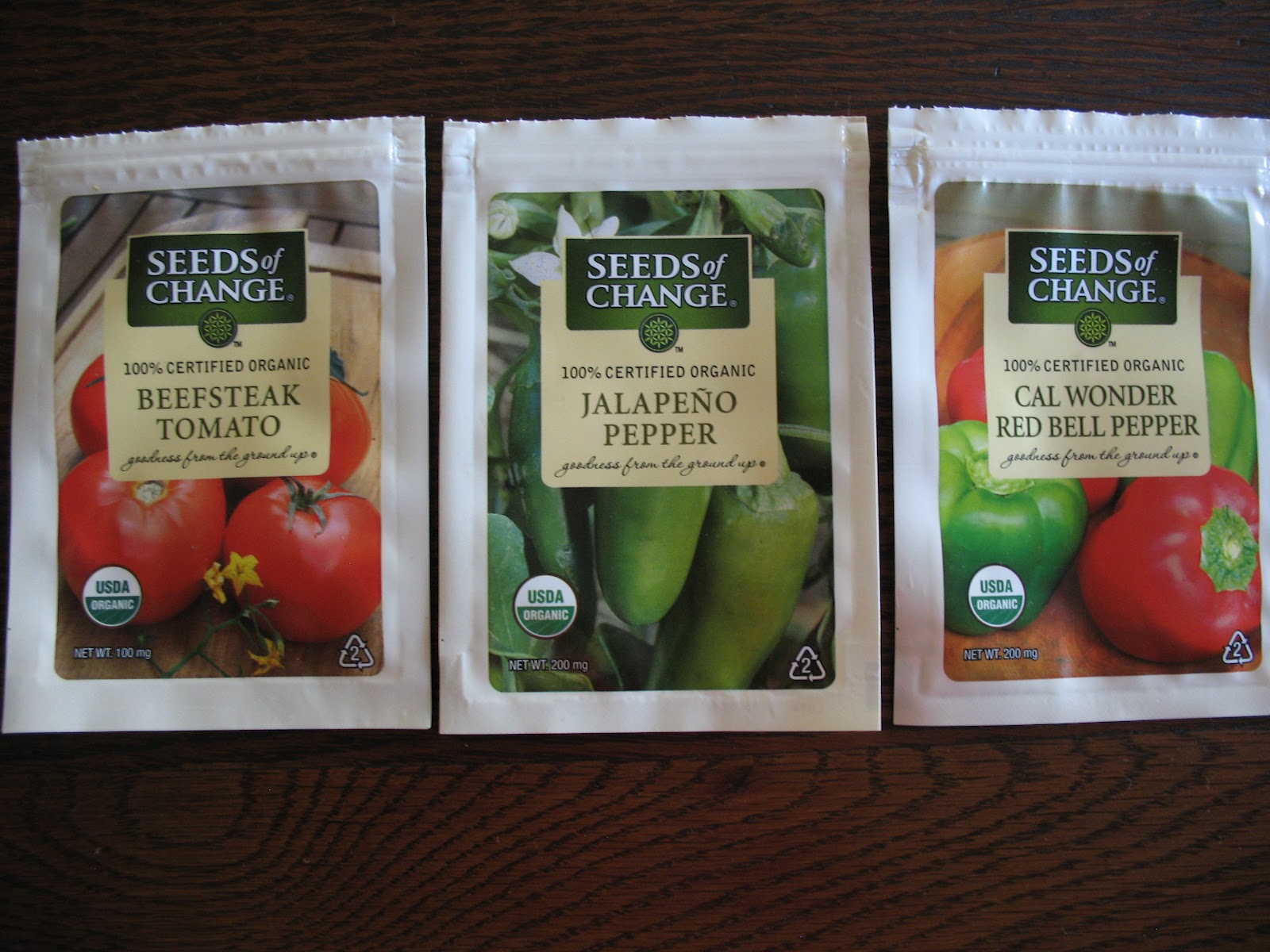
I chose seeds in the store from Seeds of Change not only because they are organic but also because I support their overall mission.
Some seeds perform better when they are started indoors and others must be started outside. Starting seeds indoors generates a productive garden earlier, it is also less expensive to buy seeds than individual plants. An additional bonus, since I purchased heirloom seeds I can save seeds from my garden for use next year. 


In each cell I planted a few extra seeds just in case a few didn't sprout. Although I didn't keep track I'm pretty sure I'm near a 100% germination rate. I have more lettuce sprouts than my 8' by 4' raised garden bed is going to allow for if I wish to have any variety. (See the second row from the top in the photo below) Lettuce seedlings have to be planted 12" apart so I'm going to plant 10 or 12 and try growing a few indoors. It is very hot and dry here in southwestern Idaho so I'm curious to see how lettuce will do in this environment. 


Sprouted Seeds in a Burpee Self Watering Seed Germination Kit (cover removed)


The lettuce, cucumbers, and tomatoes were the first to sprout. Beans, watermelon, basil, and cantaloupe followed behind. Bell peppers and jalapenos took the longest to sprout. They nearly took 2 weeks so be patient and don't forget to check the water level in the sprouting kit . When the seedlings were tall enough to reach the plastic cover of the seed kit I transplanted them into planters shaped like window boxes. I chose this shape because they fit in the windowsill but any container will certainly do. 


There are fancy garden markers you can purchase but I opted for a simple homemade variety. I folded a piece of masking tape over the end of a toothpick and wrote the name of the plant on the tape. Since I spend my days keeping up with a toddler I needed something that was quick and didn't require a lot of fuss.


Stay tuned for more news from the garden.