4.25.2012

Slow Cooker Carnitas

Growing up in Ohio I always wanted to fall in love with Mexican food. When I left the state 10 years ago the only Mexican restaurants in town were national chains. In hindsight I may have figured out why they never resonated with my palate. It was almost like they were trying too hard and everything was over spiced. Initially I moved to Colorado and that is where I finally fell head over heels in love with Mexican cuisine. Not only was the food delicious but being greeted by Mexicans felt like I was dining in a foreign country. Although there are exceptions to the rule, my dining experience is usually good when the nationality of the chef matches the cuisine. Whether I eat at a Chinese, Indian, or Ethiopian restaurant my experience with this rule has always been right on.

A few years ago I took a trip to Mexico and I was looking forward to devouring the local cuisine. As it turned out my ecologically pristine resort was the only structure for miles. The resort hosted a lot of Canadians and I wonder if that is why they tried to cook American/Canadian types of food everyday. To this day I'm still not convinced that the food labeled as chicken was actually chicken. It had loose strands of connective tissue running through it resembling the shape of a "Y". How does one butcher a chicken and end up with a piece of meat that looks like that? Never mind the odd looking chicken, the food was edible but definitely not anything to get excited about. During my week long visit they only prepared authentic Mexican food 1 night. When I boarded the airplane to come home I was sad because I didn't get the week long authentic Mexican feast I was hoping for.

Luckily in Idaho there are several fantastic Mexican restaurants and I fall in love all over again with every dish I eat. I rarely order the same dish twice because I love trying new flavors and interpretations of everyday ingredients. Street tacos is absolutely one of my favorite dishes and although I've had them with steak and chicken, carnitas are my favorite.

Definition of Carnitas from Epicurious.com


carnitas[kahr-NEE-tahz]
Mexican for "little meats," this dish is simply small bits or shreds of well browned pork. It's made from an inexpensive cut of pork that's simmered in a small amount of water until tender, then finished by cooking the pieces in pork fat until nicely browned all over. Carnitas are usually eaten with SALSA and are sometimes used as the filling in TACOS and BURRITOS.
© Copyright Barron's Educational Services, Inc. 1995 based on THE FOOD LOVER'S COMPANION, 2nd edition, by Sharon Tyler Herbst.
Read More http://www.epicurious.com:80/tools/fooddictionary/entry#ixzz1szutRqGl

Before I set out to make carnitas I found a recipe on Allrecipes.com 

The initial recipe called for a 4 pound boneless pork shoulder roast and a cooking time of 10 hours. Using pork stew meat and a crock pot setting on high I was able to create very tender pork that fell apart in only 4 hours. I'm guessing a pork roast would be more expensive, but then again I'm just guessing for now. A 2 pound package of stew meat is roughly $5 at my local market and my husband and I both ate carnitas tacos on two separate occasions. We didn't make any rice or beans, just tacos. So I definitely believe this could be an inexpensive dish for a larger family if rice, beans, or even a salad were included as a side dish. For those who do not eat pork I think this recipe would work well for chicken as well. I'm not sure how authentic this recipe is but I think it is a pretty good match to the carniatas I love so much.

Ingredients

  • 1 teaspoon salt
  • 1 teaspoon garlic powder
  • 1 teaspoon ground cumin
  • 1/2 teaspoon dried oregano
  • 1/2 teaspoon ground coriander
  • 1/4 teaspoon ground cinnamon
  • 2 lbs of pork stew meat
  • 2 bay leaves
  • 1 cup chicken broth

Combine the dry ingredients and toss the pieces of pork in the mixture. Add the seasoned pork to a slow cooker with 2 bay leaves and pour 2 cups of chicken broth around the edges. The chicken broth should be deep enough to see from the top of the pot but not covering the pork. If the pork is going to cook during an 8 hour work day set it on low. To shorten the total cooking time set the crock pot on high and it will be ready 4 hours later. One of the great things about this recipe is that pork becomes more tender the longer it cooks. I'm not saying to cook it for 24 hours but a few extra hours on either setting definitely won't ruin your dish.

Drain some of the juice from the pork before adding it to either corn or flour tortillas. In my local supermarket I can purchase locally handmade tortillas which are phenomenally better if you can find them. Typically street tacos are topped with chopped white onion and fresh cilantro with a lime wedge on the side. (I thought I had cilantro in the refrigerator but it turned out that I didn't.) Trust me, squeeze the lime juice over the taco and I promise you won't regret it. Onion, cilantro, and lime round out the dish perfectly. If you like a little heat add your favorite hot sauce, pico de gallo, or salsa.


Here's the cilantro! I also made rice with cilantro and lime. After the rice is cooked add fresh chopped cilantro and fresh squeezed lime juice to the rice.


4.24.2012

Growing an Herb Garden

If you've never grown an herb I urge you to pick your favorite one to grow and use it in your cooking. Once you've become accustomed to cooking with herbs growing right outside your door you won't be able to cook without them. Cooking with fresh herbs gives food flavor without adding a lot of salt or sugar. Plus, herbs are actually good for you.

Perennial Herbs

Thyme 

Thyme (source)


Used in many savory dishes it grows well in a sunny environment and doesn't need any special attention. Although I live in southern Idaho it doesn't get horribly cold here in the winter. When I'm preparing meals for  Thanksgiving or Christmas I'm still able to use the Thyme growing outside.

Sage

Sage (source)


Similar to Thyme it grows very well in a hot and dry environment. The annual rainfall where I live is a mere 12 inches a year and we average 201 sunny days a year. On the outskirts of town sage is one of the few plants that survives. I think sage is also pretty so I've planted some in front of my house. The green leaves have a hint of silvery gray and the plant develops royal purple flowers in late summer.

Oregano

Oregano (source)


My oregano is planted by the edge of the covered patio. It receives the hot afternoon sun and an occasional watering from the sprinklers. Over the years the patch has grown at a rate typical of most plants but I'm definitely not worried about it taking over the garden.


Mint

Mint (source)
On the other hand, be careful where you plant mint because it is likely to take over a garden bed. The north side of the house receives a few early morning hours of sunshine but is shaded the rest of the day. Since I have difficulty growing most things in this location I planted mint hoping it would take over. It has done well but it hasn't filled in the bed as quickly as I would have liked. Granted, I only put in a few small plants and expected them to fill a bed nearly the length of the house. Once a year the dried limbs should be broken off. The dry limbs have seeds for new plants so if you want more mint plant accordingly otherwise throw it away. If you put it in the compost you'll have mint growing wherever you spread your compost.


Lemon Balm

Lemon Balm (source)
A friend dug up a little of this plant from her garden and it has spread pretty quickly through mine. Although it is only planted in the back yard I have found small plants of lemon balm in the front yard. If you pick a leaf off of the plant it smells like lemons. I'm guessing the lemon balm traveled via the blade of the lawnmower or the sole of a shoe. It's very easy to grow and the dried limbs need to be broken off once a year. The dried limbs contain seeds for new plants so keep that in mind if you do or don't want more plants. Much like mint be careful where you plant lemon balm. I've never used lemon balm for cooking but I hear it makes an excellent tea.

Bi-annual Herbs

Rosemary

Rosemary (source)

Rosemary does well with a fair amount of water and sunshine but a plant only lasts 2 years. In order to keep rosemary around a cutting must be made from the plant and used for growing a new plant. I have had a plant dry out due to too much sun and not enough water. (Do they really dry out for any other reason?) I've never generated a new plant from a cutting but I noticed some store bought rosemary developed roots when I stuck the ends in a glass of water. Perhaps this year I'll give it a try because I love rosemary and it is very versatile.


Annual Herbs

Basil

Basil (source)


I've planted basil in a few locations but it seems to do well with a lot of sunshine and and water. Much like sage, and thyme it can really take some intense heat. One of the things I love about basil is the more you break off leaves for cooking the more the plant grows. 

Parsley

Parsley (source)

Planted in a relatively shady spot parsley did very well. I'd say it grew to a bush nearly 2 feet wide. I use fresh parsley from time to time but definitely not often enough to use a bush 2 feet wide. Even with a dusting of snow the parsley remained green well into December. It was definitely tougher than I thought it would be. I planted it on the north side of the house about 1 foot from the foundation so it was fairly well protected.

Cilantro

Cilantro (source)


I love cilantro and it is a crucial ingredient for some of my favorite dishes, however, it's a bit of a high maintenance diva in the garden. When blooms appear they have to be broken off right away if you want to keep the plant growing. Otherwise the blooms turn to seed, the plant dries out, and you're left with coriander. It's great that two herbs come from one plant but you definitely have to know what you're doing to maximize the herb you want.


Dill

Dill (source)
When I planted some cucumbers a few years ago I planted dill with hopes of canning some pickles. The cucumbers didn't produce very well in my poor Idaho soil so the pickles were never canned. I used the fresh dill a few times when I was cooking but it isn't an ingredient I use very often. Since fresh dill looks very delicate I planted it in the shade on the north side of the house. It grew to be about 2 feet tall but didn't last very long. The plant produced flowers and similar to cilantro it was done shortly after. If the flowers are removed before they dry the plant will continue to produce new leaves.

4.21.2012

Layout for My Raised Garden Bed

Today's high temperature is in the low 80's and I've been anxious to plant my garden. According to my climate zone I'm supposed to wait until the end of May. However, over the next 10 days we're expecting temperatures mostly in the 70's and 80's and no evening temperatures are forecasted to be lower than 40. I'm sure I'm jumping the gun and some of you may or may not agree with me. Based on today's weather I'm figuring I'll have the month of May to keep a close eye out for potential frost. My plan is to watch the weather closely and cover the garden bed if necessary. In the scaled figure below you'll see how I arranged my 8' x 4' raised garden bed.


During the course of the day the sun travels from the bottom right corner in the figure above towards the upper left corner. When I was deciding on the layout I put the taller plants in the back of the bed so the shorter plants in the front hopefully won't be shaded over time.

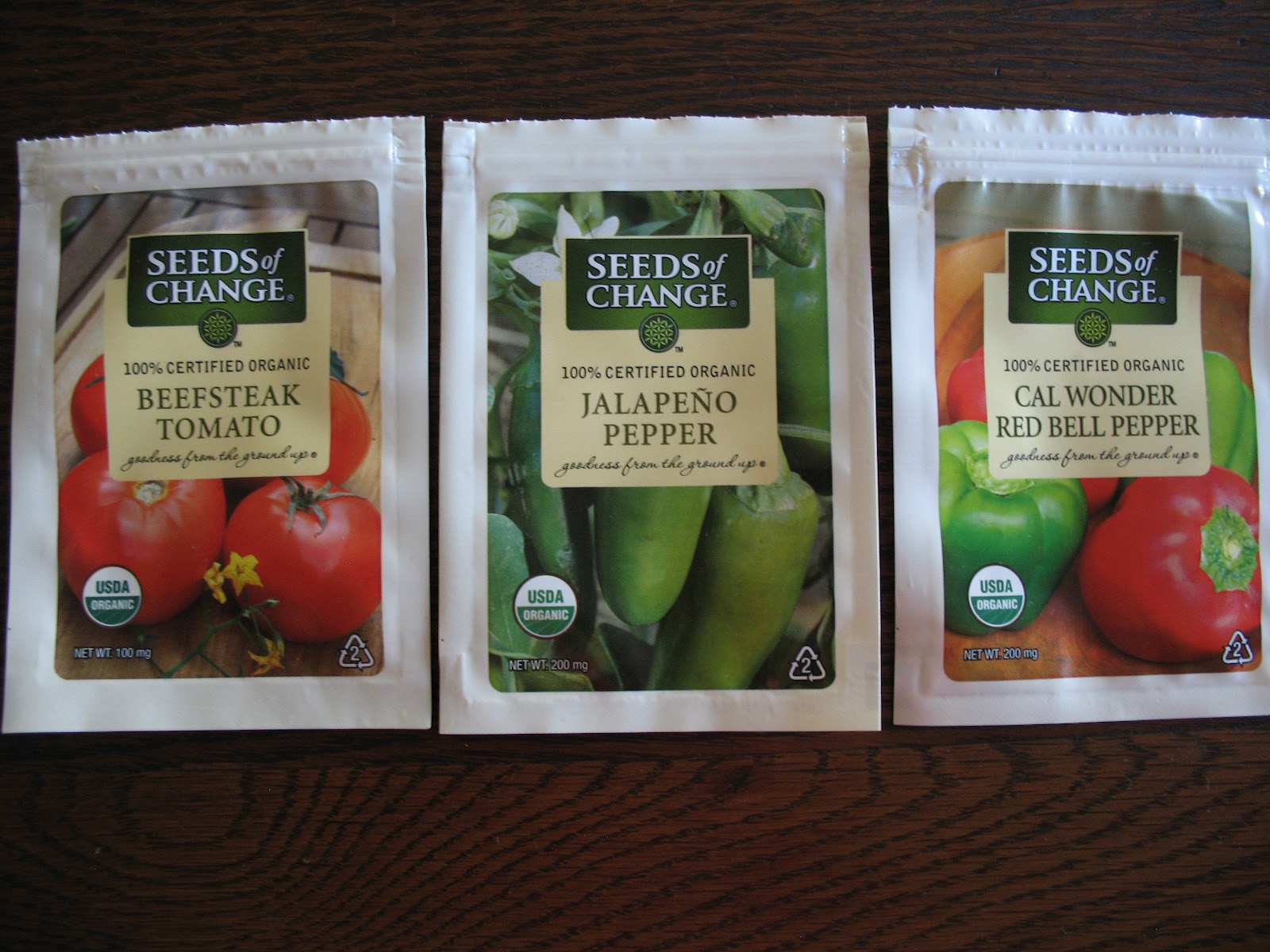
Here are the varieties I chose:


The tomatoes, jalapenos, bell peppers, redina lettuce, basil, cucumbers, and a few beans were germinated indoors. I had trouble indoors with the watermelon and beans. They both sprouted and then died. I think the self watering seed starter kept the seeds too wet. I took the cover off of the seed starter kit last week and planted a few more beans and those haven't had any problems. Today I planted seeds for watermelon, carrots, nevada lettuce, and zucchini directly into the soil. Here is a photo of the garden before anything was planted today.


The cedar bed came in a kit I purchased at a local home improvement store for $80. Between the cost of
lumber and buying a saw and hardware to build my own I figured it was nearly the same amount of money. I also spend most days, sun up to sun down, with a toddler who wants to "help" no matter what I'm doing. (My husband is a flight paramedic who works long shifts) The kit above was perfect because the pieces easily slid together with dove tail joints and no tools were required. Here is a photo of one corner joint.


More updates on the way : )

4.15.2012

Food: Medicine or Poison?

Image:
 http://stephaniezahlmann.blogspot.com/2012/03/are-you-ready-to-go-organic.html

One of my favorite hobbies is finding quotes on Pinterest. I've heard quotes in the past that were similar to the one shown on the left and I believe it is absolutely true. We tend to think once we've passed adolescence or body is "full grown". While you may not grow any taller your organs continuously rebuild themselves. Every 10 years your body makes a new skeleton. The surface of your skin is replaced every 3-4 weeks.


An article in The New York Times, based on the research of Dr. Jonas Frisen, estimates we're really only 7-10 years old. If we're only 10 years old why do people age? Why doesn't your 90 year old grandmother look like she did when she was 10?


In order to understand the aging process we must first look at cell division. When the body's cells undergo cell division, a process called mitosis, the DNA of the cell must first be copied.

Image: Mitosis


Human DNA contains 46 chromosomes. If the DNA isn't duplicated before the cell divides the daughter cells will only have 23 chromosomes. DNA is a critical component to cells because it contains information the cell needs to operate.

While the body is amazing, it isn't 100% perfect. Each time the DNA is copied there is a little which is lost in translation. For example, the bone structure of your grandmother's 90 year old face is slightly different than it was when she was 20 or 30. If you've ever made a photocopy of a picture and then a copy of the photocopy the image begins to lose its clarity. Now, imagine only copying the copy 100 times in a row. By the 100th copy you most likely won't be able to detect the original image. Welcome to the aging process! The foods and beverages we consume play a larger role than filling us up when we're hungry. They determine the health of our future cells and organs. 

Antioxidants

Most people have heard of the antioxidant properties of vitamin's A, C, and E. Oxidation is the name for what happens when atoms lose electrons. One electron is all that separates Hydrogen and Helium. Which would you rather hold a match to?


Electrons matter to the chemistry of our body. When an atom or molecule is missing electrons, negatively charged particles, it will try to balance the positively charged protons, found in the nucleus, by "stealing or borrowing" electrons from other atoms. Oxidation is an ongoing process in the body because the body uses oxygen to function. In order to take care of the organism we have to take care of our atoms. There is a hierarchy within the body where each level builds the next: Atoms, Molecules, Cells, Tissues, Organs, Organ Systems, Organism. 
Image: Oxidation and Reduction


A study conducted by the Department of Physiology (Animal Physiology II), Faculty of Biology, Complutense University, Madrid, Spain is one of many that shows oxidation creates inflammation within the 
body. Eating a diet that combats inflammation is important because heart disease, diabetes, alzheimers, 
arthritis, and cancer are now believed to be primarily caused by inflammation. 


Anti-Inflammatory Foods

If you've ever watched Willard Scott announce the Smuckers 100+ birthdays he'll often point out that the people who love to garden seem to live the longest. A diet full of fresh fruits and vegetables, lean meats, and fish cause the pH of the human body to increase. Loren Cordain's Book, The Paleo Diet, in my opinion offers the best guidance in navigating the food world. Imagine the things you would eat if modern technology didn't exist. Your diet would be full of plants, nuts, and lean meats. Cordain makes an excellent point by showing what cavemen and hunter-gatherers ate. Eating like a caveman is how we are genetically designed to eat. 

When the pH decreases the body is full of inflammation. Here is a list of inflammatory ingredients and some of the reasons I avoid them:
  • Sugar
    • Is found in some unexpected grocery items. I've found high fructose corn syrup in marinara sauces, wheat bread and crackers, and yogurt. For a person who is trying to eat healthy these items certainly sound healthy but upon closer inspection there are healthier options available. Instead of buying marinara sauce I buy canned tomatoes and create my own. I've found that Greek yogurt contains less sugar than traditional yogurt. 
    • I never buy or use ANY artificial sweeteners. The way I see it, my body knows how to metabolize sugar without any difficulty. In my morning coffee or tea I use raw sugar or honey. Although I haven't tried it yet I'm looking forward to getting my hands on some coconut palm sugar I learned about while watching Dr. Oz. It doesn't cause spikes in blood sugar like traditional sugar does. (click here to view palm sugar video at doctoroz.com)
  • Refined Grains
    • When grains are refined they lose their nutritional value. I believe if a food doesn't offer the body some sort of value, why eat it? Many food manufacturers stamp their packages with the phrase "whole grain". It is ironic to me that highly sugared cereals also contain this message. Do people really believe whole grain coated in sugar is healthy? When purchasing wheat bread look for "stone ground" wheat flour as the first ingredient or simply make your own. Here is a link to my Lazy Wheat Bread recipe. 
  • Vegetable Oil Instead of vegetable oil usually made of (corn, soy, or canola) I buy safflower or unrefined coconut oil. The first reason is because corn, soy, and canola are crops that are most likely to be genetically modified. The second reason is that they contain high levels of Omega-6. Omega-3's reduce inflammation and have many health benefits but Omega-6 oils negate the positive benefits of Omega-3's.
  • Trans-fats
    • The term "trans" in chemistry refers to atoms orienting themselves on opposite sides of a molecule. In the figure below you will see hydrogen atoms surrounding a molecule of saturated fat.

      http://accessibility.psu.edu/files/webstandards/saturatedfat-label2.gif

      Notice in the figure below some of the blue hydrogen atoms have been removed. Atoms are like people in that they don't like to do a lot of work and they like to be stable. So when a few of the hydrogen atoms are removed notice that the hydrogen atoms in the middle are on opposite sides of the molecule. 
http://healthfuleatingtips.files.wordpress.com/2011/03/transfat.jpg
    Trans fats are commonly associated with partially hydrogenated oils. Hence, if you remove some of the hydrogen atoms they will orient themselves on opposite sides of the fat molecule which creates a trans fat.
  • Dairy
    • I've always wondered who was the first person that thought drinking a white excretion from the nether region of another species looked good. We are the only species that drinks milk past infancy and we're encouraged to do so. Asians who eat their traditional diet full of fruits, vegetables, and fish have fewer incidences of osteoporosis than those who consume dairy. When was the last time you had dairy in your favorite Chinese restaurant? In eastern medicine dairy is not the great substance western medicine claims it is. Your stomach contains acids to help digest food. What happens when you mix lemon juice or vinegar in a glass of milk? It curdles. The eastern point of view is that dairy clogs the system. If you want to have strong bones eat green leafy vegetables and exercise. Remember your bones are continuously rebuilding themselves and they make new bone where bones are stressed. Weight bearing exercise is great for building bone strength.
  • Processed and Feedlot Meats
    • There are many reasons I try to avoid processed and feedlot meats. Thankfully my husband is a hunter so I am able to enjoy lean deer or elk throughout the year. Some people theorize that animals kept on these feedlots aren't happy. They never get to roam through a green pasture and stand in fecal matter all day. It matters if you believe in the transfer of energy. An animal that isn't happy and is probably stressed passes those stress chemicals and energy right to your dinner plate. Looking at the number of Americans who are continuously stressed and/or taking anti-depressants, I think there may be something to this theory. If you've never seen the documentary Food Inc I believe everyone should see it. Cows raised on feedlots are fed corn to make them gain weight. In the documentary you will see that corn is found in 90% of the items sold in supermarkets. The cows gain weight eating corn and components of corn are found in nearly everything. I'm really not surprised America has an obesity epidemic. They're feeding us the same stuff they're fattening the cows with. A sad moment in the documentary involves a little boy named Kevin. His family stopped for hamburgers on their way home from vacation. Kevin's burger contained E. Coli and within 2 weeks he passed away. The FDA didn't issue a  recall on the meat that he ate until well after he had passed.
    •  Grass fed beef is a much better choice it is leaner and contains beneficial fats. Also, if a grain fed cow is exclusively fed grass for 1 week 80% of the E. Coli in its system disappears. (Food Inc)
  • Artificial Ingredients
    • I'm old enough to remember America before there was an obesity epidemic. Over the years people have become more sedentary and supermarkets are full of overly processed food. The next time you are in the market read the ingredients of the items you're purchasing. I worked as an analytical chemist for 5 years and I've encountered my fair share of chemicals. There are many that I avoid one I definitely watch out for is BHT. It's found as a preservative in most cereals and crackers. BHT stands for Butylated Hydroxy Tolulene. It is a fine white powder that smells very similar to moth balls. That odor has stuck in my mind for years; it's definitely not natural.
    • The nutrition label may say there are "0g" of trans-fats per serving, but if the ingredient list contains any oils that are "partially hydrogenated" there are trans-fats in that product. If you're not sure what a food ingredient is look it up on Google. This may seem like a daunting task at first but over time we can change our food system. Every purchase you make is a vote and money often has a louder voice than the people do. 


To your health : )


4.13.2012

My Healthier Version of Coffee Cake

I have a tendency of looking over a recipe and then changing it to make it my own. Some mornings I crave something sweet with my coffee but I find so many coffee cakes, pastries, and doughnuts are too sweet for my taste. The reason I feel this is a healthier version is because I swapped out a few ingredients and cut the amount of sugar nearly in half. Instead of sour cream I used unsweetened applesauce, I replaced butter with coconut oil, doubled the amount of cinnamon, and used less than half of the sugar the original recipe called for. The original recipe called for 7oz of white sugar and 7oz of packed brown sugar. Instead I measured 7oz of brown sugar without packing it down. 


The Health Benefits of Coconut Oil


Athletes have been using coconut oil because the fat is readily available for energy use. I recently purchased my first jar and despite its name it doesn't have a coconut flavor. I've used it in place of vegetable oil in many dishes. It is one of the ways I introduce something healthy to my skeptical husband. For more information on how coconut oil helps: stress relief, maintaining cholesterol levels, weight loss, increased immunity, proper digestion and metabolism, relief from kidney problems, heart diseases, high blood pressure, diabetes, HIV and cancer, dental care, and bone strength visit Organifacts.net

The Health Benefits of Cinnamon from Organicauthority.com

  1. 1/2 teaspoon of cinnamon per day can lower your bad cholesterol (or LDL).
  2. Cinnamon may help treat Type 2 Diabetes by lowering blood sugar levels and increasing the amount of insulin production in the body.
  3. Cinnamon has antifungal properties, and it's been said that candida cannot live in a cinnamon environment. 
  4. Cinnamon can reduce the proliferation of leukemia and lymphoma cancer cells.
  5. Cinnamon has an anti-clotting effect on the blood.
  6. Honey and Cinnamon combined has been found to relieve arthritis pain.
  7. When added to food, cinnamon inhibits bacterial growth and food spoilage, making it a natural food preservative.
  8. Just smelling cinnamon boosts cognitive function and memory.
  9. Cinnamon fights the E. coli bacteria in unpasteurized juices.
  10. Cinnamon has been found to be an effective natural remedy for eliminating headaches and migraine relief.
  11. Cinnamon can also help stabilize blood sugar (which is great for weight loss). A couple of dashes in your morning tea or cereal is all it takes!


Since it is just me and my husband I also cut the original recipe in half. This cake can be baked in a 9 x 9 pyrex or a round cake pan. If you double the recipe use two 9" pans instead of one large pan. The original recipe stated the cake wouldn't cook correctly if all of the batter was added to a large pan.

The Cake (Serves 6 people)

1 1/2 C All Purpose Flour
1/2 teaspoon Baking Powder
1/2 teaspoon Baking Soda
1 teaspoon Ground Cinnamon
1 C Unsweetened Applesauce
7 oz Unpacked Brown Sugar
3 Eggs
3 Tablespoon Melted Coconut Oil

Combine all of the ingredients in a bowl, excluding the flour, and mix by hand. Add the flour last and mix just until it is incorporated. Gluten begins to develop when the flour is added and if it is over mixed the cake will become tough.

Streusel Topping

3/4 C Unpacked Brown Sugar
1/8 C All purpose Flour
2 Tablespoon Melted Coconut Oil
1/2 Tablespoon Ground Cinnamon

Mix the brown sugar, flour, and cinnamon in a bowl with a fork. Drizzle the melted coconut oil into the mixture and continue to stir with the fork until it is the consistency of moist sand. The original recipe called for chopped walnuts in the topping which will give it an Omega-3 boost. I omitted the nuts because I worried my toddler might choke on them.

Pour the cake into a greased 9" pan and top with the streusel. Bake in the center of a 350 F oven for 30-40 minutes.* A toothpick or a knife inserted should come out with a few crumbs on it but not have wet batter.

*When I popped it in my oven I put it on the top rack which seemed too high after 15 minutes because the cake was still very wet. I moved the cake to the bottom rack and it was done by the 40 minute mark.


The Original Recipe on Americastestkitchenfeed.com

UPDATE 4/30/12

It never occurred to me when I wrote this to see if there was a website that calculated ingredients into nutrition facts. Ta-Da! http://recipes.sparkpeople.com/recipe-calculator.asp

The "official" nutrition facts from the website are given further down the page. I apologize for my HTML abilities. Initially the facts were organized one above the other instead of side by side. Since I didn't think that would be very useful I created an image document with the relevant information just below. The facts on the left are for my recipe and the facts on the right are for the original recipe.

Although I didn't add as much sugar and used unsweetened applesauce in place of sour cream my recipe has a higher sugar content. In my opinion all sugars are not created equally. I would much rather receive my sugar from fruits than from granulated sugar. Other than that my recipe has fewer calories, less fat, and more potassium than sodium. Potassium is important because it opposes the effects of sodium in the body.


The Results for My Recipe:

Nutrition Facts

User Entered Recipe
  6 Servings
Amount Per Serving
  Calories401.4
  Total Fat13.9 g
     Saturated Fat10.6 g
     Polyunsaturated Fat0.7 g
     Monounsaturated Fat1.7 g
  Cholesterol92.5 mg
  Sodium197.3 mg
  Potassium246.7 mg
  Total Carbohydrate80.0 g
     Dietary Fiber2.0 g
     Sugars56.5 g
  Protein6.2 g

  Vitamin A3.3 %
  Vitamin B-124.0 %
  Vitamin B-62.7 %
  Vitamin C1.3 %
  Vitamin D5.0 %
  Vitamin E0.2 %
  Calcium8.5 %
  Copper5.9 %
  Folate3.2 %
  Iron14.5 %
  Magnesium3.1 %
  Manganese16.0 %
  Niacin8.5 %
  Pantothenic Acid    0.4 %
  Phosphorus    7.5 %
  Riboflavin11.7 %
  Selenium1.5 %
  Thiamin10.5 %
  Zinc2.2 %


The Results for the Original Recipe

Nutrition Facts

User Entered Recipe
  12 Servings
Amount Per Serving
  Calories521.7
  Total Fat25.5 g
     Saturated Fat11.9 g
     Polyunsaturated Fat5.6 g
     Monounsaturated Fat6.5 g
  Cholesterol89.5 mg
  Sodium466.3 mg
  Potassium236.8 mg
  Total Carbohydrate77.0 g
     Dietary Fiber2.2 g
     Sugars49.1 g
  Protein7.6 g
  Vitamin A14.9 %
  Vitamin B-124.0 %
  Vitamin B-64.1 %
  Vitamin C1.1 %
  Vitamin D2.5 %
  Vitamin E3.4 %
  Calcium15.6 %
  Copper11.3 %
  Folate5.0 %
  Iron14.0 %
  Magnesium6.6 %
  Manganese27.1 %
  Niacin10.1 %
  Pantothenic Acid    1.9 %
  Phosphorus    12.4 %
  Riboflavin13.5 %
  Selenium2.8 %
  Thiamin14.2 %
  Zinc3.8 %


*Percent Daily Values are based on a 2,000 calorie diet. Your daily values may be higher or lower depending on your calorie needs.


*Percent Daily Values are based on a 2,000 calorie diet. Your daily values may be higher or lower depending on your calorie needs.